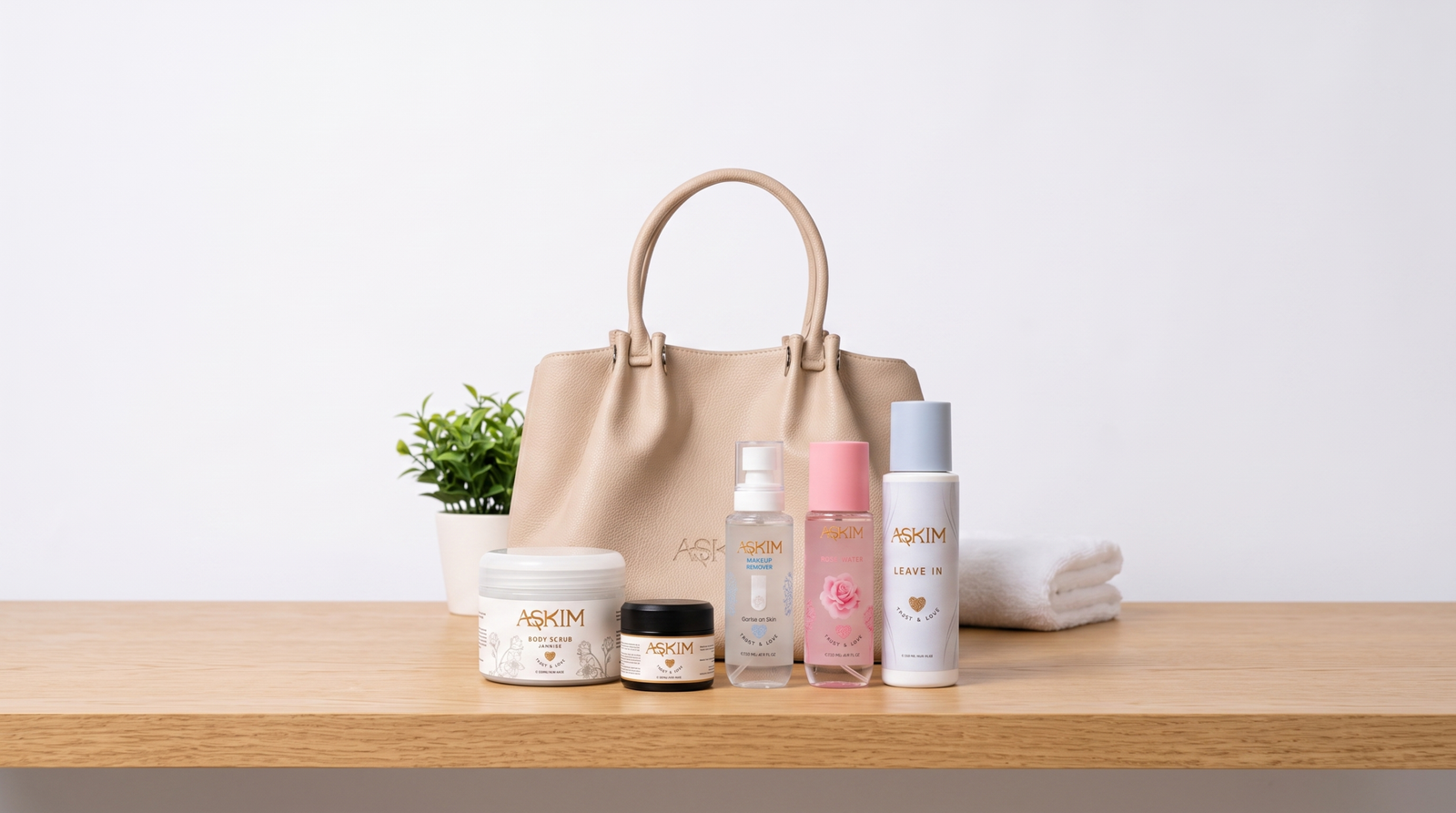
Picture this: you’re standing in a Jordanian pharmacy aisle holding two near-identical face creams. One is cheaper with eye-catching packaging. The other carries a small registration number and an unfamiliar acronym: JFDA.
Jordan has quietly built one of the most credible cosmetics manufacturing ecosystems in the region. Today, 62 licensed local factories produce medical supplies and cosmetics, all of them holding international GMP (Good Manufacturing Practice) certification, and Jordanian beauty products are exported to 58 countries worldwide. But the local market also contains products that bypass regulation — knock-offs, unregistered imports, and grey-market goods.
The line between the two is the Jordan Food and Drug Administration (JFDA).
In the next five minutes you’ll learn:
- What JFDA certification actually means
- How a cosmetic product earns the JFDA stamp
- 5 quick checks to do before any skincare purchase in Jordan
- Why “natural” and “organic” are not the same as “certified safe”
Why JFDA Certification Matters
What JFDA Actually Does
- Product Registration — Every cosmetic SKU must submit a complete dossier including formulation, manufacturer details, stability data, and packaging.
- Lab Testing — Samples are pulled and tested against the approved formula and Jordan’s technical standards.
- Field Inspection — Unannounced visits to factories, warehouses, and retail points to verify compliance.
- Recall Authority — Power to pull any product from the market that proves unsafe or non-compliant.
Under the Foundations and Legislations of Cosmetics and Pharmaceutical Cosmetics of 2016, JFDA maintains a “negative list” of prohibited ingredients. Any product containing them is barred from sale or distribution in Jordan.
How a Product Earns the JFDA Stamp
Before a serum or cream reaches a Jordanian shelf, it travels through a multi-stage process.
Stage 1: GMP Certification — The Prerequisite
GMP (Good Manufacturing Practice) is the international standard for cosmetics manufacturing facilities. A factory cannot even apply to register products with JFDA unless its facility is GMP-certified.
This covers:
- Cleanroom standards and equipment sterilization
- Temperature and humidity control
- Batch documentation and traceability
- Staff qualification and training protocols
Jordan’s 62 licensed local factories all hold this certification — which is why Jordanian-made cosmetics have export credibility in 58 countries.
Stage 2: The Registration Dossier
The manufacturer submits a complete file containing:
- Full formulation using INCI international ingredient names
- Safety assessments and dermatological test results
- A stability study of at least 3 months covering physical, chemical, sensory, and microbial parameters
- Packaging and label artwork
- GMP certificate and Free Sales Certificate from country of origin for imports
Stage 3: Laboratory Testing
JFDA labs analyze the samples to verify:
- No prohibited substances from the negative list
- Ingredient concentrations match the declared formula
- No microbial contamination
- Formulation stability over time
Stage 4: Approval and Ongoing Oversight
Once cleared, the product is issued a JFDA registration number printed on the packaging. Approved products remain under periodic post-market surveillance for as long as they’re on sale.
5 Checks to Make Before Buying Any Skincare Product in Jordan
This is the most important section of this guide. Save it as a mental checklist for your next purchase.
1. Visible JFDA Registration Number
Look for a registration number often labeled “Reg. No.” or “JFDA Reg.” printed on the box or container.
2. Full Manufacturer Name and Address
The packaging must display the manufacturer’s full legal name and physical address — not just the brand name.
3. Full INCI Ingredient List
All ingredients must be listed in descending order by concentration using internationally standardized INCI names.
4. Manufacturing Date or PAO Symbol
You should find either:
- Clear manufacturing and expiry dates, or
- A PAO (Period After Opening) symbol indicating how many months the product remains safe after opening
5. Arabic Labeling for the Local Market
Jordanian regulations require cosmetic products sold for home use to carry Arabic labeling alongside English.
Natural vs Certified vs Organic — Know the Difference
This is where many shoppers get genuinely misled.
Natural ≠ Safe
The word “Natural” has no legal definition in cosmetics globally. Any brand can print it on a box without verification.
And natural doesn’t automatically mean safe. Concentrated essential oils can burn skin, and unrefined botanical extracts can carry microbial contamination if not properly processed.
JFDA-Certified = Verified by an Authority
JFDA certification is the only label that guarantees the product:
- Passed laboratory testing
- Has a registered, traceable formulation
- Was manufactured in a GMP-compliant facility
- Can be recalled if it turns out to be harmful
Organic = A Specific International Certification
“Organic” refers to specific third-party certifications such as ECOCERT, COSMOS, and USDA Organic that govern how the raw ingredients are grown.
The ideal product carries:
- JFDA registration
- GMP manufacturing
- Optional organic certification if organic ingredients are claimed
Trust official registration first and marketing language second.
Why Askim Embraced JFDA and GMP From Day One
At Askim, we didn’t treat JFDA certification as a regulatory checkbox — we built our brand around it.
Every product we make is:
- Manufactured in a GMP-certified facility with full batch traceability
- Fully JFDA-registered with the registration number printed on every package
- Made in Jordan with ingredients that undergo regular quality testing
- Bilingually labeled in Arabic and English to meet local regulations
We believe genuine beauty starts with trust, and trust can only be built on transparency and verified compliance.
Frequently Asked Questions
Visit the official JFDA website and use the registered product lookup service or contact the authority directly.
No. Each product must be registered individually even if the manufacturer already has other registered products.
GMP certifies the facility where the product is made, while JFDA certifies the product itself.
Yes. Any cosmetic product sold in the Jordanian market must be JFDA-registered whether locally produced or imported.
PAO stands for “Period After Opening.” It indicates how many months the product remains safe after first opening.
You can file a complaint through the JFDA website, hotline, or your nearest health directorate.
Final Takeaway
Choosing a cosmetic product isn’t just an aesthetic decision — it’s a daily health choice that touches your skin every single day.
JFDA certification isn’t bureaucratic red tape. It’s the assurance that what you’re applying to your skin has been laboratory-tested, manufactured in a certified facility, and remains under regulatory oversight.
Next time you pick up any skincare product in Jordan, give it 30 seconds:
- JFDA registration number ✓
- Full manufacturer name and address ✓
- INCI ingredient list ✓
- Manufacturing date or PAO symbol ✓
- Arabic labeling ✓
Your skin deserves those 30 seconds. Locally made brands tend to clear that bar more easily, because production and registration happen in the same country you are buying in — our companion piece explains why JFDA certified cosmetics made in Jordan are the safer default.