Winter hair care is a different job from the rest of the year. Cold, dry air outside and heated rooms inside pull moisture out of the hair shaft, wool hats create friction and static, and hot showers strip the natural oils that normally keep hair smooth. The result is familiar to most of us in Jordan from November to February: dull, dry hair that frizzes the moment you step outdoors. The good news is that a few sensible adjustments protect your hair without an expensive routine. This guide covers what changes in winter, how to adapt your washing and conditioning, and where a leave-in conditioner and a hair mist fit in.
Why winter is hard on your hair
Hair holds a small amount of water inside each strand. When the air around it is very dry, that water leaves faster than the hair can replace it. Cold winter air is naturally low in humidity, and indoor heating dries the air even further, so hair is dehydrating around the clock. Understanding this is the first step in winter hair care, because every change below is about slowing that moisture loss.
Dry hair is also electrically charged more easily, which is a winter hair care problem on its own: strands lift and float after you pull off a hat or scarf. Add the mechanical rubbing of wool against the hair cuticle and you get the classic winter combination: frizz on top, flat roots underneath, and ends that feel rough and tangle quickly.
Finally, we tend to wash in hotter water when it is cold. Very hot water lifts the cuticle and rinses away the scalp’s natural oils, so hair loses the thin protective layer it needs most in winter.
Winter hair care routine: wash less, condition more
The foundation of good winter hair care is simple: reduce what strips moisture and increase what adds it back. Start with washing. If you currently shampoo daily, try every second or third day. Use lukewarm water rather than hot, and concentrate shampoo on the scalp, where oil and residue actually build up, rather than scrubbing it down the lengths. A gentle, sulfate-free shampoo from our hair care range is a good match for the season because it cleans without leaving hair squeaky and tight.
Conditioner is not optional in winter hair care. Apply it from mid-lengths to ends on every wash, leave it for two or three minutes, and rinse with cool water to help the cuticle lie flat. Once a week, swap your regular conditioner for a longer-wearing treatment: leave it on for ten to fifteen minutes under a towel before rinsing.
Drying matters as much as washing in any winter hair care routine. Rubbing hair with a towel roughens the cuticle, so press and squeeze instead, or use a soft cotton t-shirt. If you blow-dry, keep the setting warm rather than hot and stop when hair is still slightly damp. The American Academy of Dermatology lists these everyday habits among the most common causes of hair damage in its guide to hair care habits that can damage your hair.
Leave-in conditioner: your daily shield against frizz
If you add only one product to your winter hair care routine, make it a leave-in conditioner. Unlike a rinse-out conditioner, a leave-in stays on the hair all day, giving the comb something to slide on and giving the cuticle a light coating that slows moisture loss. That coating is exactly what hair is missing in cold, dry air, which makes a leave-in the most useful winter hair care product you can own.
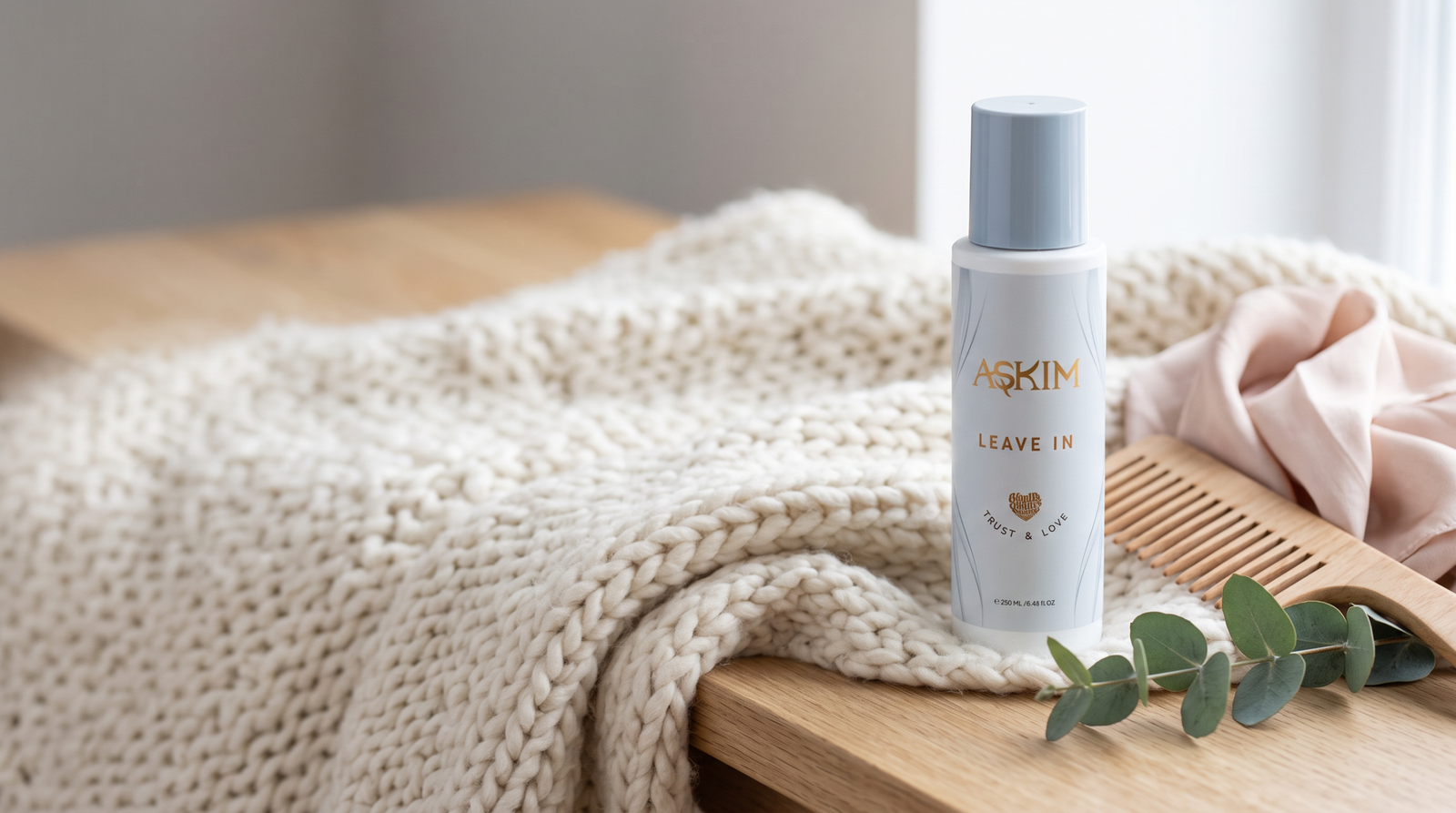
Our Detangling Leave-In is a 250 ml spray made in Jordan with lanolin, argan oil, rosemary oil and vitamin B5. Lanolin coats the strand, argan oil adds shine and softness, and B5 helps hair hold moisture and comb through more easily. It is light enough for daily use without weighing hair down, and at an accessible price it is realistic to use every day through the season rather than saving it for special occasions.
How to use it in winter: spray onto towel-dried, damp hair, focusing on mid-lengths and ends and going lighter at the roots. Comb through with a wide-tooth comb from the ends upwards. Do not rinse. On dry hair, a light spray in the afternoon tames hat frizz without the need to re-wet or restyle.
Hair mist in winter: fragrance without the alcohol dryness
Many of us reach for perfume to freshen hair that has spent the day under a hat. In winter that habit works against you: perfume is alcohol-based, and alcohol evaporates quickly, taking a little more moisture with it each time. A hair mist is the better winter hair care tool for the job.
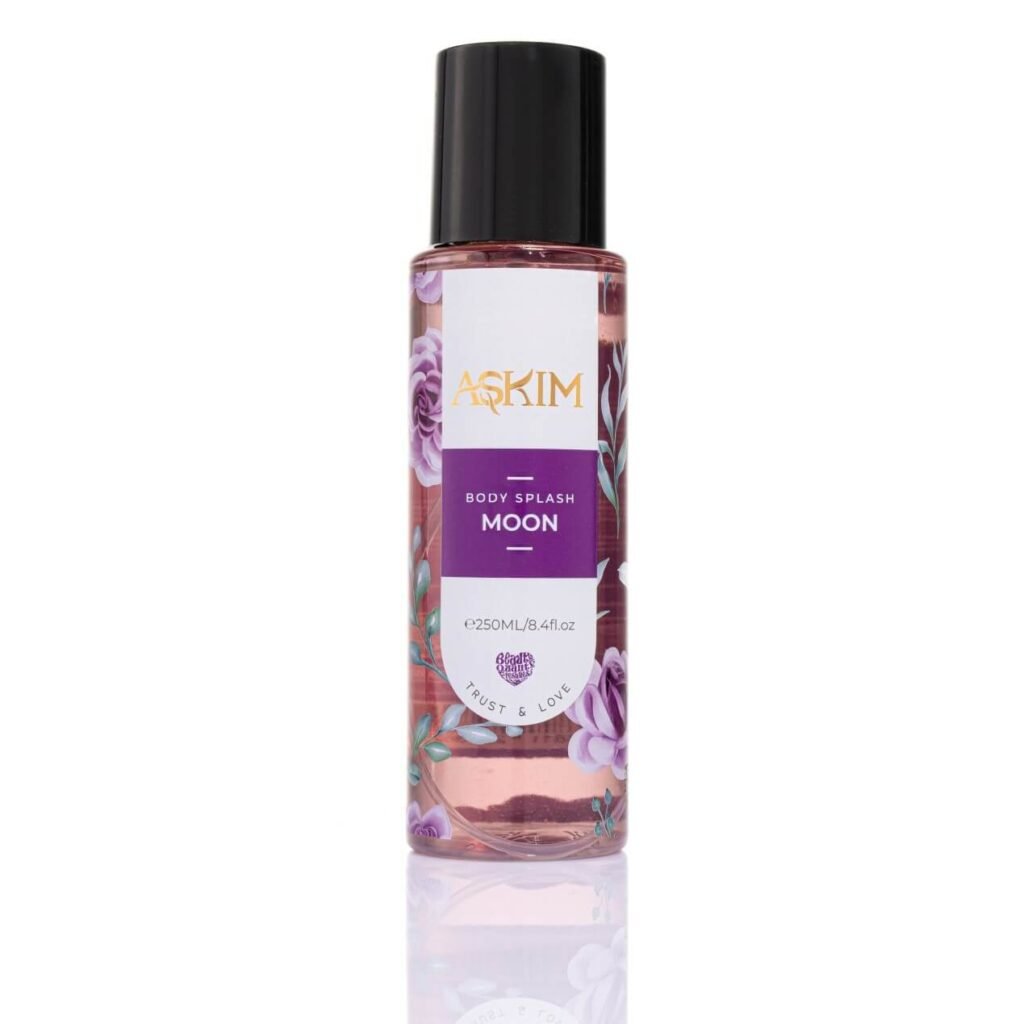
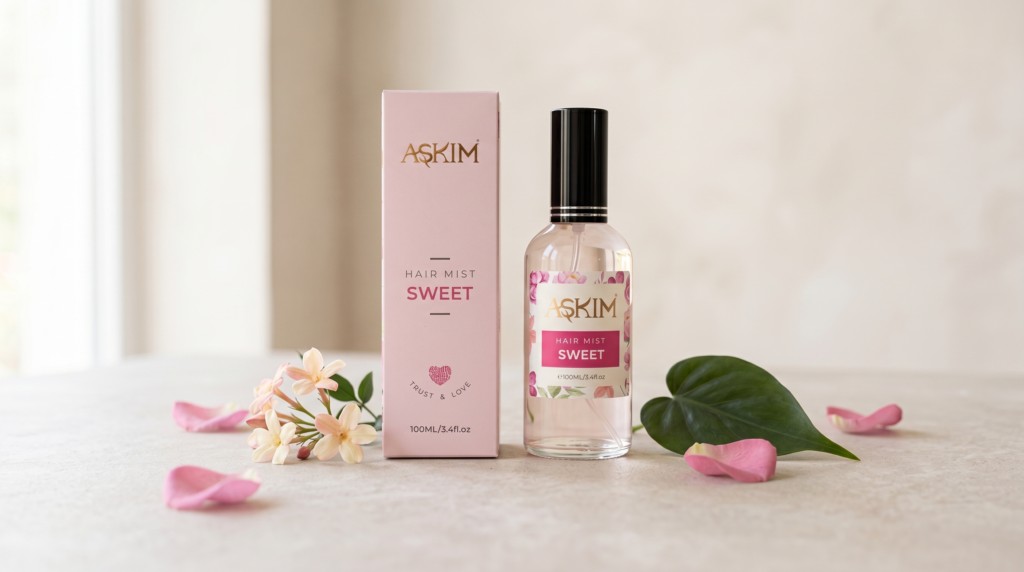
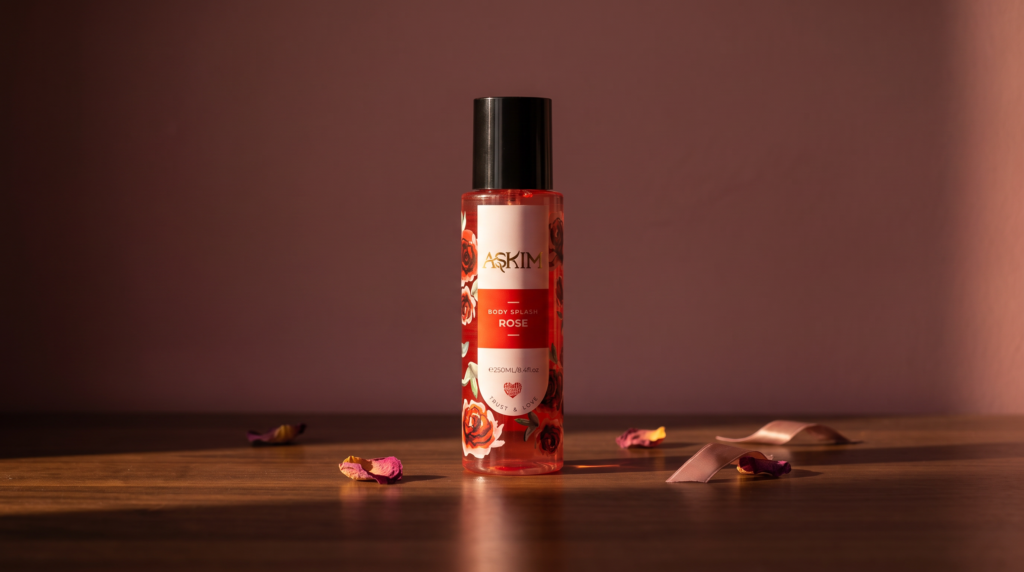
Askim’s hair mist collection is formulated for hair specifically, with vitamins B5 and E, so it conditions lightly while it scents. For the colder months, warmer profiles such as Moon (blackcurrant and pear over jasmine, praline and vanilla) or Rose (raspberry and jasmine over tonka bean and vanilla) suit the season. Mist from about twenty centimetres onto dry hair, a few sprays at a time, and let it settle rather than brushing it through immediately. Think of the leave-in as the care step and the hair mist as the finishing step; the two work together.
Small habits that make a big difference
Beyond products, a handful of winter hair care habits protect hair more than any single treatment. Never leave the house with wet hair in cold weather; water inside the strand can expand as it cools and hair becomes more fragile. Choose hats and scarves lined with silk or satin, or wear a thin silk scarf under a wool hat, to reduce friction and static.
Trim your ends every eight to ten weeks, because dry winter ends split and travel up the strand if left alone. If your home is very dry with heating, a bowl of water near the radiator or a small humidifier raises indoor humidity and benefits both hair and skin. Finally, protect hair at night: a satin pillowcase or a loose braid reduces overnight tangles, so you start each day with less to repair.
Consistent winter hair care is mostly about doing less damage and holding on to more moisture. Wash gently, condition every time, keep a leave-in within reach, swap perfume for a hair mist, and cover up sensibly. By spring your hair will show the difference.
Frequently asked questions
How often should I wash my hair in winter?
For most hair types, every two to three days is a good winter hair care rhythm. If your scalp gets oily sooner, wash when needed but use lukewarm water and a gentle shampoo, and always follow with conditioner.
Can I use a leave-in conditioner and a hair mist together?
Yes. Apply the leave-in to damp hair after washing for care and detangling, then use the hair mist on dry hair for scent and a light refresh. They serve different purposes and do not interfere with each other.
Does wearing a hat every day damage hair?
Hats themselves do not damage hair, but rough wool, tight fits and putting a hat on wet hair increase friction and breakage. Choose a lined or smooth-fabric hat, dry your hair first as part of your winter hair care routine, and use a leave-in to reduce static when you take it off.