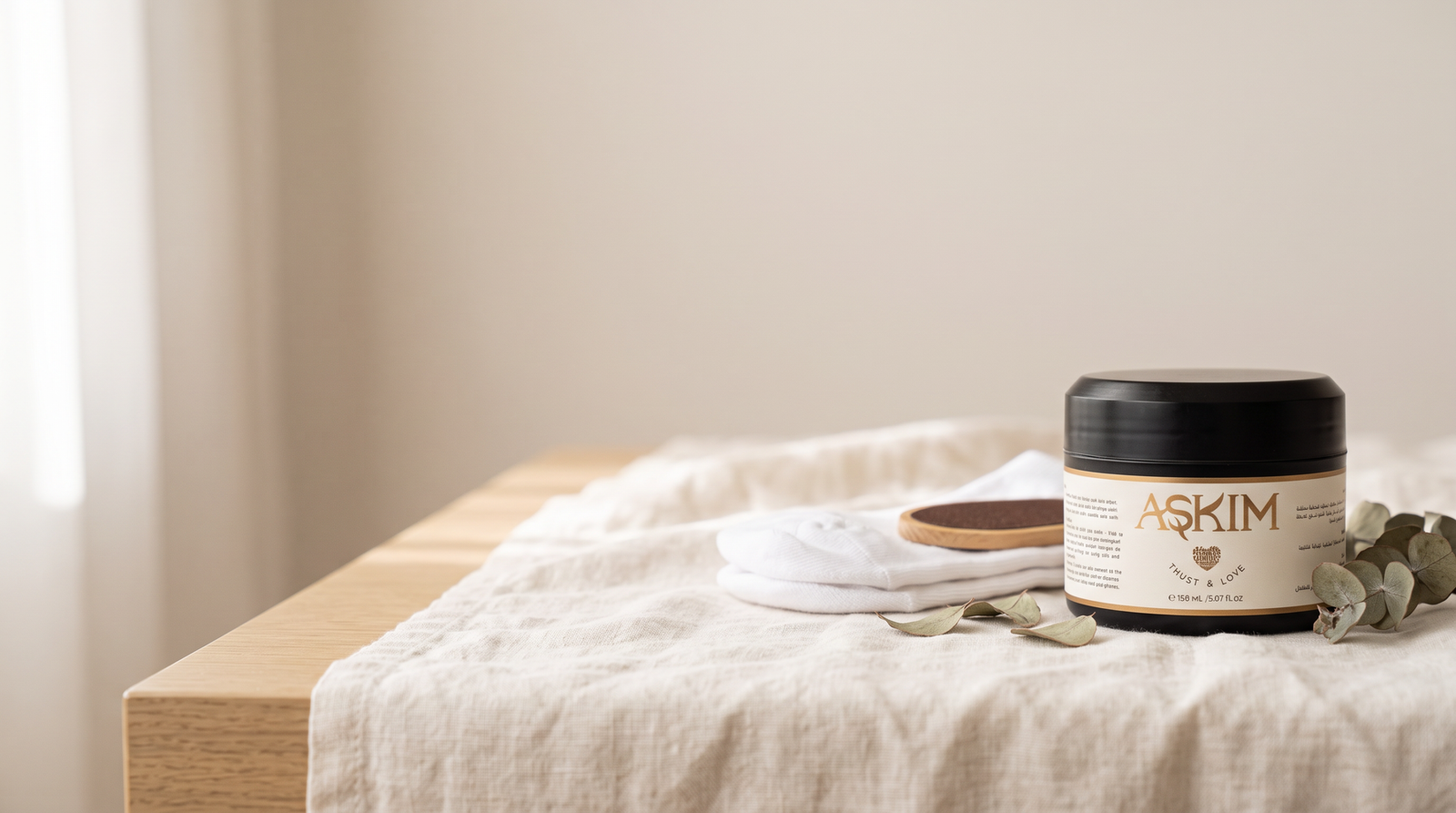
Cracked heels are one of the most common winter skin complaints in Jordan, and they rarely appear overnight. Cold air, indoor heating, closed shoes and long days on hard floors all pull moisture out of the thick skin on your heels, until it turns dry, rough and eventually splits. The good news is that mild cases usually respond well to a simple, consistent routine built around a rich plant butter.
In this guide we explain why heels crack in the cold months, why shea butter suits dry feet so well, and how to build an easy nightly routine using affordable, Jordanian-made products.
Why Cracked Heels Get Worse in Winter
The skin on the heel is naturally thicker and has fewer oil glands than the rest of the body, so it depends heavily on moisture from the outside. In winter, several factors work against it at once:
- Cold, dry air and indoor heating lower the humidity around your skin, so water evaporates from the surface faster.
- Closed shoes and thick socks trap sweat during the day, then the skin dries out quickly once you take them off.
- Hot showers and harsh soaps strip away the natural oils that help the skin hold water.
- Standing for long hours puts pressure on the heel pad, which widens the tiny cracks already present in dry skin.
When dry skin loses its flexibility, the pressure of each step stretches the edges of the heel and small fissures appear. Left untreated, these fissures deepen and may become uncomfortable. Catching the problem at the “rough and flaky” stage is far easier than treating deep cracked heels later.
Why Shea Butter Suits Dry Feet
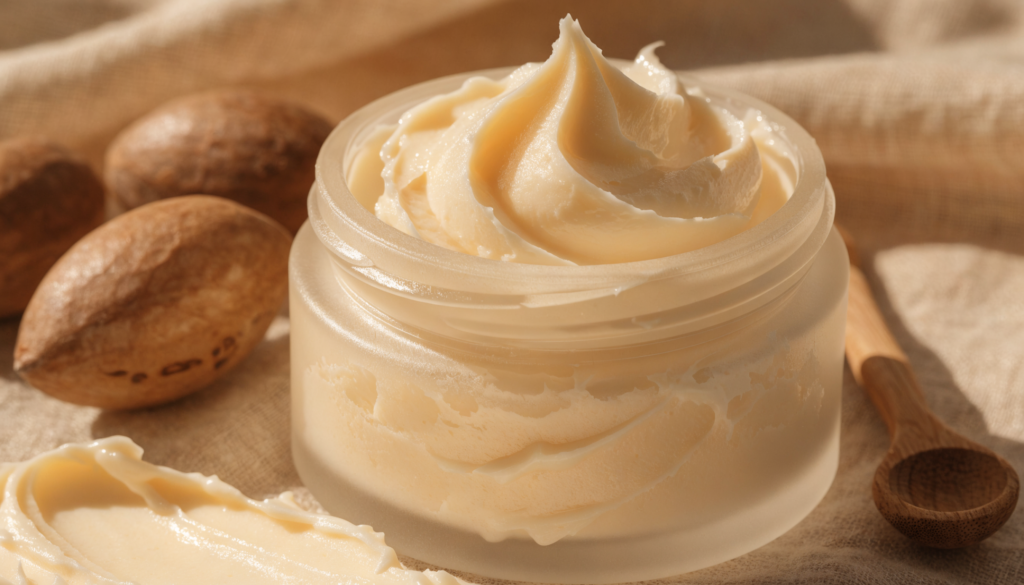
Shea butter is a plant fat pressed from the nuts of the shea tree. It is naturally rich in fatty acids such as oleic and stearic acid, which give it a thick, almost waxy texture at room temperature that melts on contact with skin. That texture matters for cracked heels for two reasons.
First, it forms a protective layer on the surface that slows the evaporation of water from the skin, the same principle behind every heavy foot cream. Second, because it is a rich emollient, it fills in the gaps between rough, lifted skin flakes and leaves the heel feeling smoother almost immediately.
Askim’s Shea Butter 150g is made in Jordan with a simple formula and sold at a price that lets you use a generous amount every night without hesitation, which is exactly what dry heels need. If you prefer a lighter, scented texture for the rest of the body, our body butter collection uses the same approach for arms, legs and elbows.
A Simple Nightly Routine for Cracked Heels
The most effective routine for cracked heels is not complicated; it simply has to be repeated. Here is a five-minute version you can do before bed:
- Soak or shower. Warm (not hot) water for five to ten minutes softens the thick skin. Skip very hot water, which dries the skin further.
- Pat dry gently. Leave the skin slightly damp; moisturizer locks in water better on damp skin.
- Apply a generous layer of shea butter. Warm a small scoop between your palms until it melts, then massage it into the heels, the sides of the feet and any rough areas. Give the cracked heels an extra layer.
- Cover with cotton socks. Socks keep the butter in place, protect your sheets and let the emollient work overnight.
- Repeat every night for two to three weeks. Most people notice softer skin within the first week, but deeper cracks need consistent care.
During the day, a thin layer in the morning helps as well, especially if you wear closed shoes for many hours.
Gentle Exfoliation: When and How
Removing the build-up of dead, hardened skin helps your moisturizer reach the living layers underneath, but exfoliating cracked heels needs a light hand. Over-scrubbing, or using blades on dry skin, can make the cracks worse.
- Exfoliate once or twice a week, never daily, and always after soaking when the skin is soft.
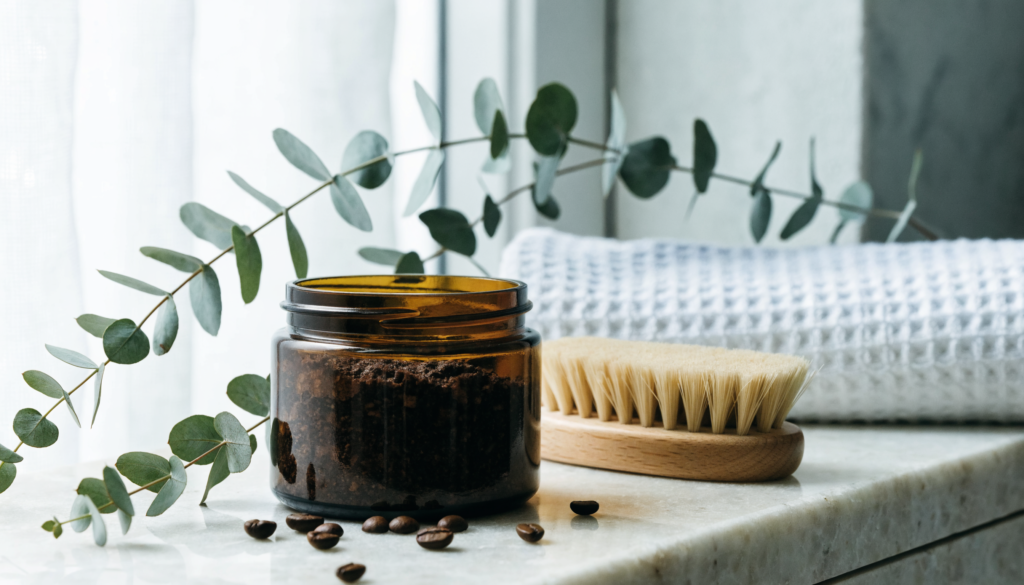
- Use a gentle sugar-based scrub or a soft foot file in slow, even strokes. Askim’s body scrubs combine sugar with nourishing oils, so they polish without leaving the skin stripped.
- Avoid scrubbing directly over open or painful cracks. Work around them and let them close first.
- Always follow with shea butter. Exfoliation without moisturizer leaves the skin even more exposed to dry air.
Think of exfoliation as the preparation and the butter as the treatment. Doing the first without the second rarely helps.
Everyday Habits That Keep Heels Soft
Once your heels have recovered, a few small habits keep cracked heels from coming back next winter:
- Keep a jar of shea butter beside your bed so the nightly step becomes automatic.
- Choose shoes with a closed, cushioned back; open-back slippers let the heel pad spread and crack more easily.
- Drink enough water and avoid walking barefoot on cold tile floors for long periods.
- Switch from harsh bar soap to a mild shower gel, which is kinder to already dry feet.
A note on when to see a doctor: the advice here is for everyday dry skin. If your cracks are deep, bleeding, very painful or show signs of infection, or if you have diabetes or circulation problems, please see a doctor or dermatologist before treating them at home. The American Academy of Dermatology has a helpful guide on how to care for dry, cracked heels that explains when professional care is needed.
Frequently Asked Questions
How long does it take shea butter to improve cracked heels?
With nightly use and cotton socks, most people feel a difference in softness within five to seven days. Visible improvement in cracked heels usually takes two to three weeks of consistent care; deeper cracks take longer.
Can I use shea butter on my feet in the morning too?
Yes. Apply a thin layer and let it absorb for a few minutes before putting on socks. Keep the heavier layer for the evening routine.
Is shea butter better than a regular body lotion for cracked heels?
For heels, a rich butter is generally more effective than a lotion. Lotions contain more water and are absorbed quickly, while shea butter stays on the surface longer and keeps moisture in through the night. Body lotion is still a good choice for the rest of the body.
Cracked heels in winter are common, but they are also one of the easiest skin concerns to improve with patience and the right product. Soak, moisturize generously with shea butter, cover with socks and exfoliate gently once a week. Within a few weeks your feet will thank you, and so will your budget.