Choosing the right makeup remover is what decides whether your face feels genuinely clean at the end of the day or tight, greasy and uncomfortable. Most of us pick one based on what happens to be on the shelf rather than what our skin actually needs, and the result is a routine that works against itself: a product that strips, followed by a moisturiser that has to undo the damage. This guide covers how to match a remover to your skin type, what to look for on the label, and how to use it without irritating your eyes or your skin.
What a Makeup Remover Actually Does
A remover has one job — to lift makeup, sunscreen and the oily residue of the day off the surface of the skin so your regular cleanser can do its work properly. Long-wear foundation, mascara and lip colour are formulated to resist water and sweat. A water-based face wash on its own will not shift them, which is why traces of mascara so often survive until morning.
A remover uses oils, mild emulsifiers or gentle surfactants to dissolve those pigments so they wipe or rinse away cleanly. Think of it as the first step of cleansing rather than a substitute for it.
How to Choose a Makeup Remover for Your Skin Type
Skin type is the single most useful filter when you are standing in front of a shelf of options.
Oily and combination skin does best with a light, water-based formula. These lift makeup without leaving a film, so pores feel clear rather than coated. If your T-zone shines by midday, a heavy balm is probably not your friend.
Dry skin usually prefers an oil- or cream-based formula. The oils dissolve makeup while leaving the skin feeling cushioned rather than stripped, which matters a great deal in Jordan’s dry climate.
Sensitive skin should aim for the shortest ingredient list you can find, with little or no fragrance and no strong alcohol near the eye area. Patch test on the inner forearm before committing to a full bottle.
Normal skin has the most freedom. Pick based on the makeup you actually wear — heavier coverage calls for a richer formula, everyday tinted moisturiser does not. You can compare formats side by side in our skin care collection.
Ingredients Worth Paying Attention To
Labels are more useful than marketing copy. Glycerin and plant oils help skin stay comfortable after cleansing. Rose water is a common, well-tolerated base in lighter formulas. Emollients such as squalane keep an oil-based product from feeling heavy on the face.
On the other side, a very high alcohol content near the eyes tends to sting and dry the delicate skin around them, and long fragrance lists are the most common source of irritation for people with reactive skin. Reading the ingredient list from the top down tells you most of what you need to know, since ingredients are listed in order of concentration. The American Academy of Dermatology’s guidance on face washing is a useful non-commercial reference for the basics.
How to Use a Makeup Remover Correctly
- Start with dry hands and a dry face — most formulas work best before water is introduced.
- Apply the product to a cotton pad, or to your fingertips if it is a balm or an oil.
- Hold the pad against closed eyes for ten to fifteen seconds before wiping, so mascara and eyeliner soften instead of being dragged off the lash line.
- Work outward in gentle strokes rather than scrubbing.
- Follow with your usual cleanser to clear any remaining residue, then moisturise while the skin is still slightly damp.
The pause in step three is the part most people skip, and it is the one that spares your lashes.
Why a Jordanian-Made Makeup Remover Is Worth a Look
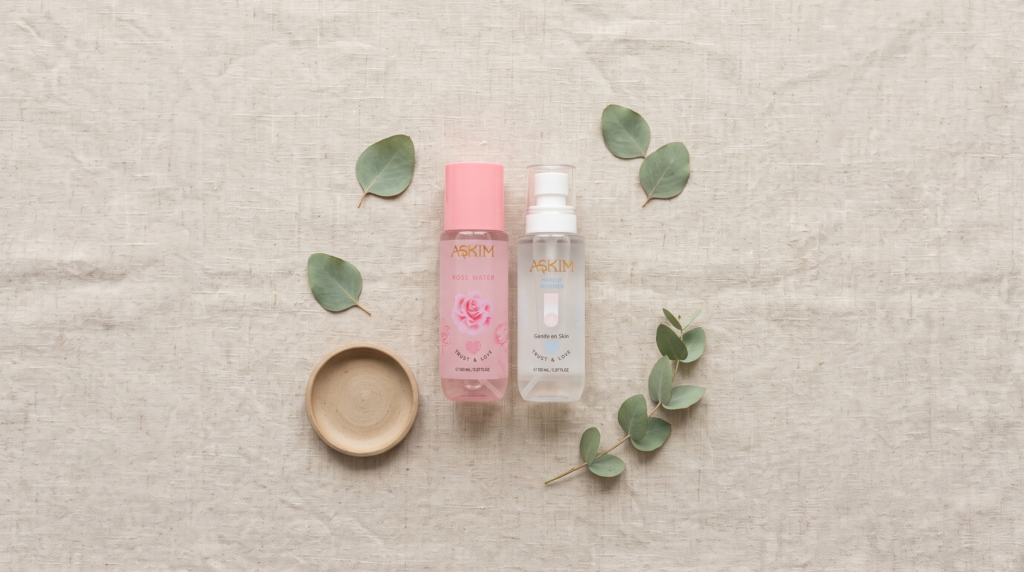
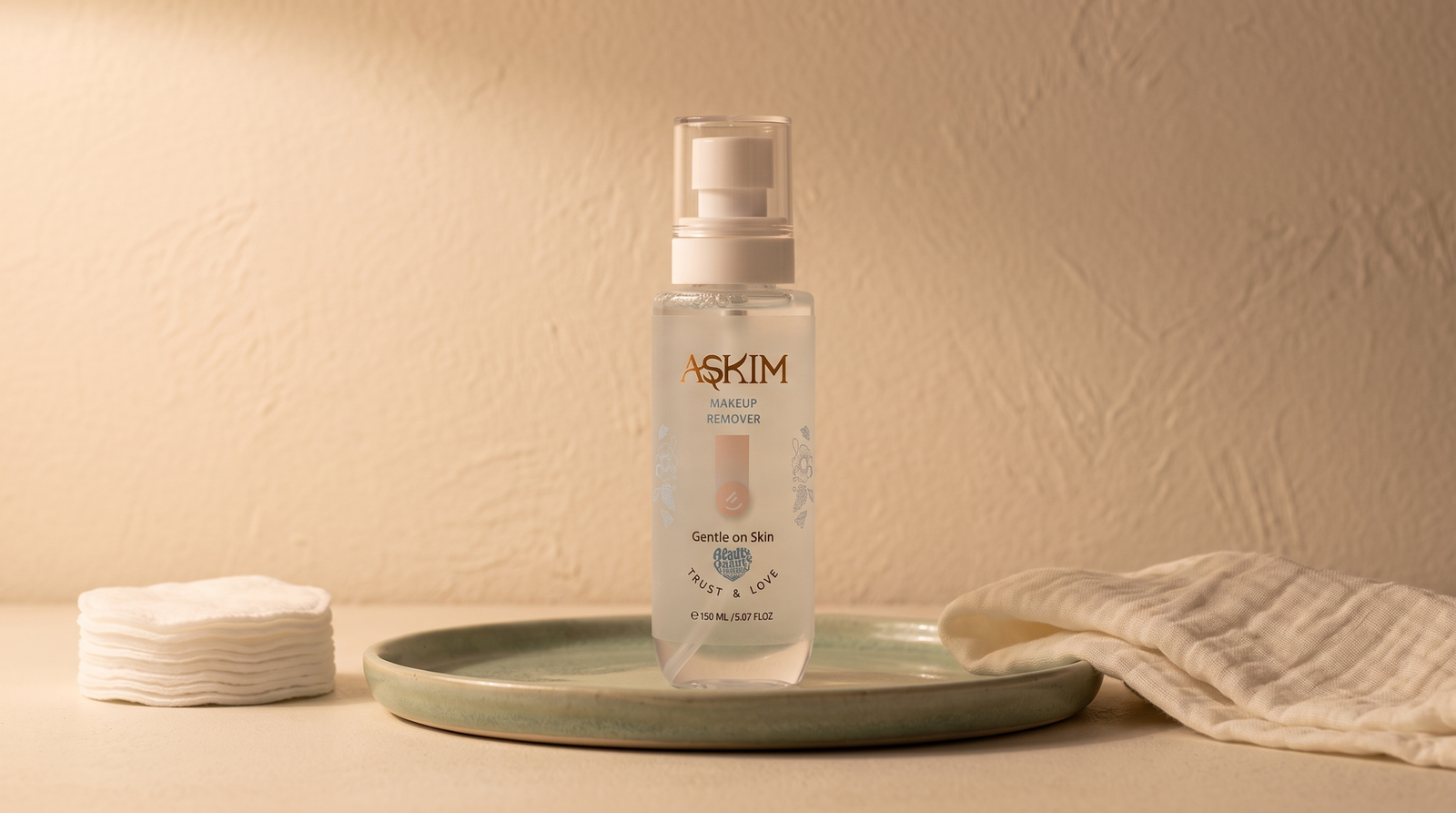
Locally made cosmetics carry two practical advantages: stock turns over faster, so what you buy is fresher, and the price does not have to absorb the cost of a long import chain. Askim’s Makeup Remover 150 ml is sized for daily use, and it is also available paired with rose water for anyone who prefers to follow up with a toning step. Everything is made in Jordan, at a price meant for a shelf you use every day rather than an occasional treat.
Frequently Asked Questions
Do I still need to wash my face after using a makeup remover?
Yes. A remover breaks down makeup and surface oil, but a proper cleanser is what clears the residue left behind. Skipping that second step is the most common reason skin still feels film-y afterwards.
Can I use a makeup remover every day?
Daily use is fine for most people, as long as the formula suits your skin type and you are not rubbing hard. If your skin feels tight or looks red afterwards, the issue is usually the formula or the pressure rather than the frequency.
What is the difference between a makeup remover and micellar water?
Micellar water is one category of makeup remover — a water-based one that uses micelles to attract oil and pigment. Oil and balm removers are a separate category that dissolve makeup with lipids instead. Both reach the same result by different routes, so the choice comes back to your skin type.