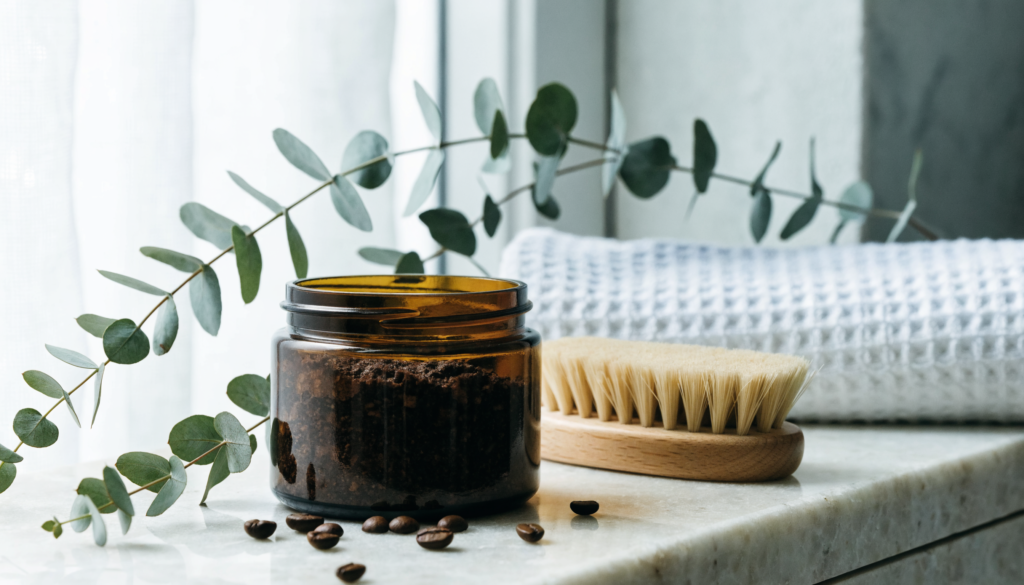
A coffee body scrub is one of the simplest ways to wake up dull, rough skin, and it works for a reason that has nothing to do with marketing: coffee grounds have irregular edges that lift dead cells more effectively than smooth, uniform beads. If you have wondered whether a coffee body scrub is worth adding to your routine, or you already own a jar and are not sure you are using it well, this guide covers what it does, what it does not do, and the exact way to use it so your skin ends up soft rather than irritated.
What Makes a Coffee Body Scrub Different
Most body scrubs rely on one of two things: a physical particle that rubs dead skin away, or an acid that dissolves it. A coffee body scrub belongs firmly to the first group. Ground coffee is naturally coarse and uneven, so each particle has edges that catch on dry flakes rather than rolling over them the way a round sugar crystal or a plastic bead would. That is why the result is visible after a single shower rather than after weeks.
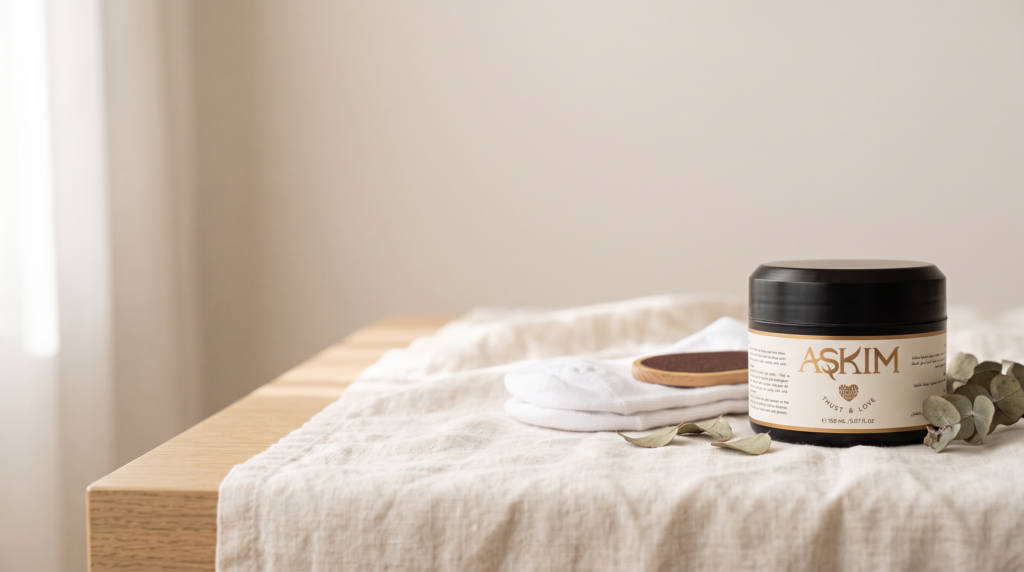
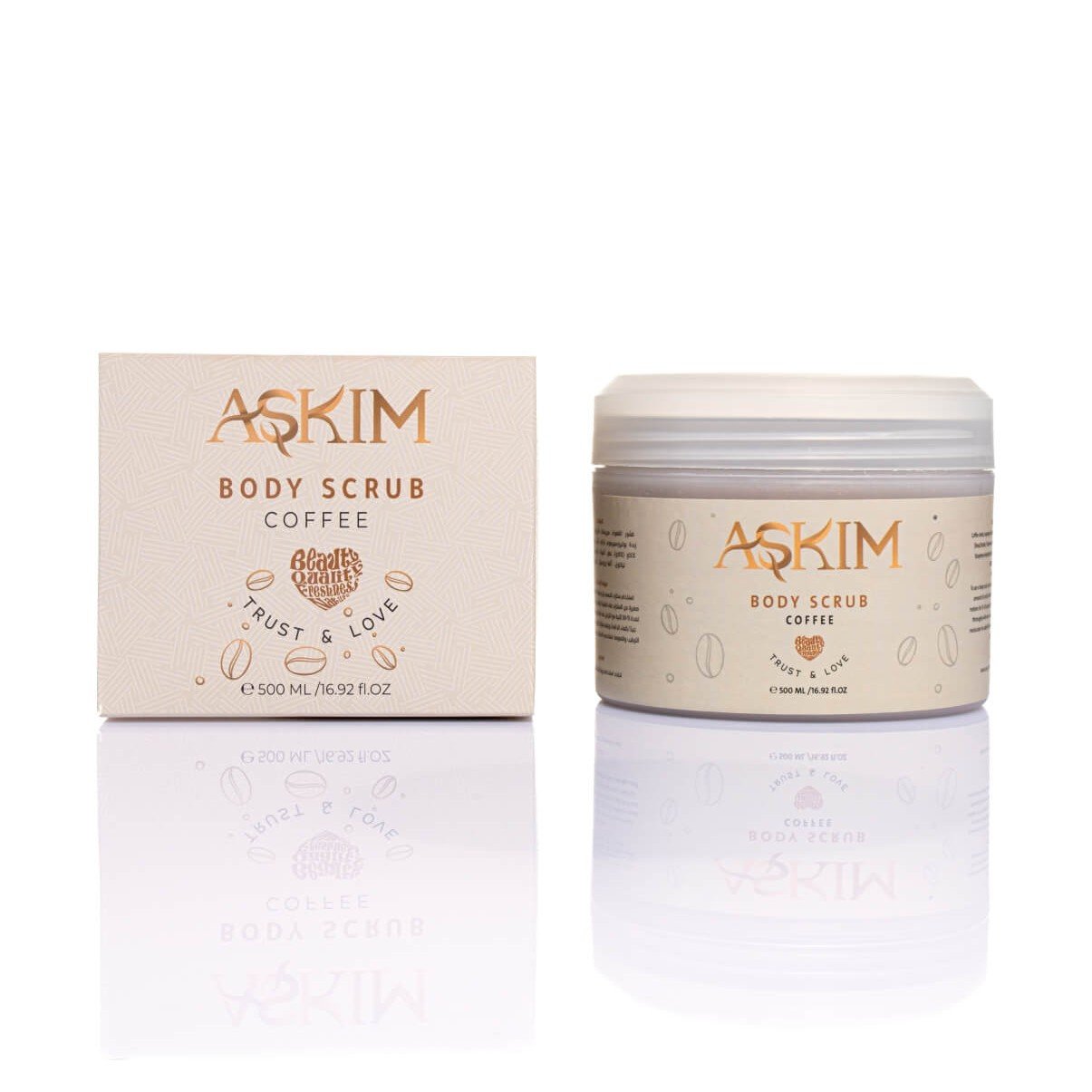
Because the action is mechanical, there are no acids involved, which makes coffee a sensible choice for people whose skin stings with chemical exfoliants. The massage itself also brings blood to the surface, so skin looks livelier and slightly pinker for a short while afterwards. That effect is real, but it is temporary, and it is not a treatment for anything. Askim’s Coffee Body Scrub is made in Jordan in a 500 ml jar, which is enough for three to four months of twice-weekly use, at a price that makes a consistent habit realistic.
Coffee Body Scrub Benefits You Can Actually Notice
The honest list is shorter than most labels suggest, but every item on it is something you will feel the same day.
Smoother texture. Rough patches on elbows, knees, heels and the backs of the arms are mostly layers of dead skin. A coffee body scrub lifts those layers so the surface feels even again.
Less dullness. Dead cells scatter light and make skin look grey. Removing them is why skin looks brighter straight after a scrub, with no brightening ingredient needed.
Better moisturiser performance. Lotions and butters sit on top of dead skin instead of reaching the living layer below. Exfoliating first lets your moisturiser do its job, which is why the two steps belong together.
Fewer ingrown hairs over time. Regular, gentle exfoliation keeps hair follicles clear, which is useful before and after shaving or waxing, just not on the same day.
A sensory lift. The scent of a coffee body scrub is simply coffee, and the circulation boost is mildly waking. Many people prefer it as a morning step rather than an evening one.
How to Use Coffee Body Scrub Step by Step
Start in a warm shower. Wet your whole body and let the warm water soften the skin for a minute or two first. Scrubbing dry skin is harsher and less effective.
Take a generous scoop and apply it to one area at a time, working from the feet upwards. Massage in slow circular motions for 15 to 30 seconds per area, spending the longest on heels, knees and elbows and the least time on the chest and inner arms, where skin is thinner.
Use moderate pressure. The grounds are doing the work, not your hands. Pressing hard only causes redness and does not remove any more dead skin.
Rinse thoroughly with warm water until no grounds remain, then rinse the tub straight away so the coffee does not mark it. Pat your skin dry rather than rubbing it, and leave it slightly damp.
Moisturise within three minutes. This step is not optional. Freshly exfoliated skin loses water faster, and skipping the moisturiser is the reason some people believe scrubs leave their skin dry.
How Often to Use It, and the Mistakes to Avoid
Once or twice a week is right for most people. Daily use is the most common mistake with any scrub, coffee included. Over-exfoliating thins the protective barrier, which leads to tightness, sensitivity and, ironically, rougher texture as the skin tries to defend itself. The American Academy of Dermatology’s advice on how to exfoliate safely at home makes the same point: match the frequency to your skin type, and stop if the skin becomes red or sore.
A few other things to avoid. Do not use a coffee body scrub on broken skin or sunburn, or on the same day you shave or wax. Keep it off the face, which needs a far gentler product. If you have a diagnosed skin condition, ask your doctor before adding any physical exfoliant. And close the lid properly between uses so water does not get into the jar.
What to Apply After a Coffee Body Scrub
Exfoliating without moisturising afterwards undoes half the benefit. The best follow-up depends on the season and your skin. In cooler months, or on very dry areas such as shins and heels, a rich body butter seals in water for hours. In warm weather, or on areas that are not especially dry, a lighter body lotion does the same job with less weight.
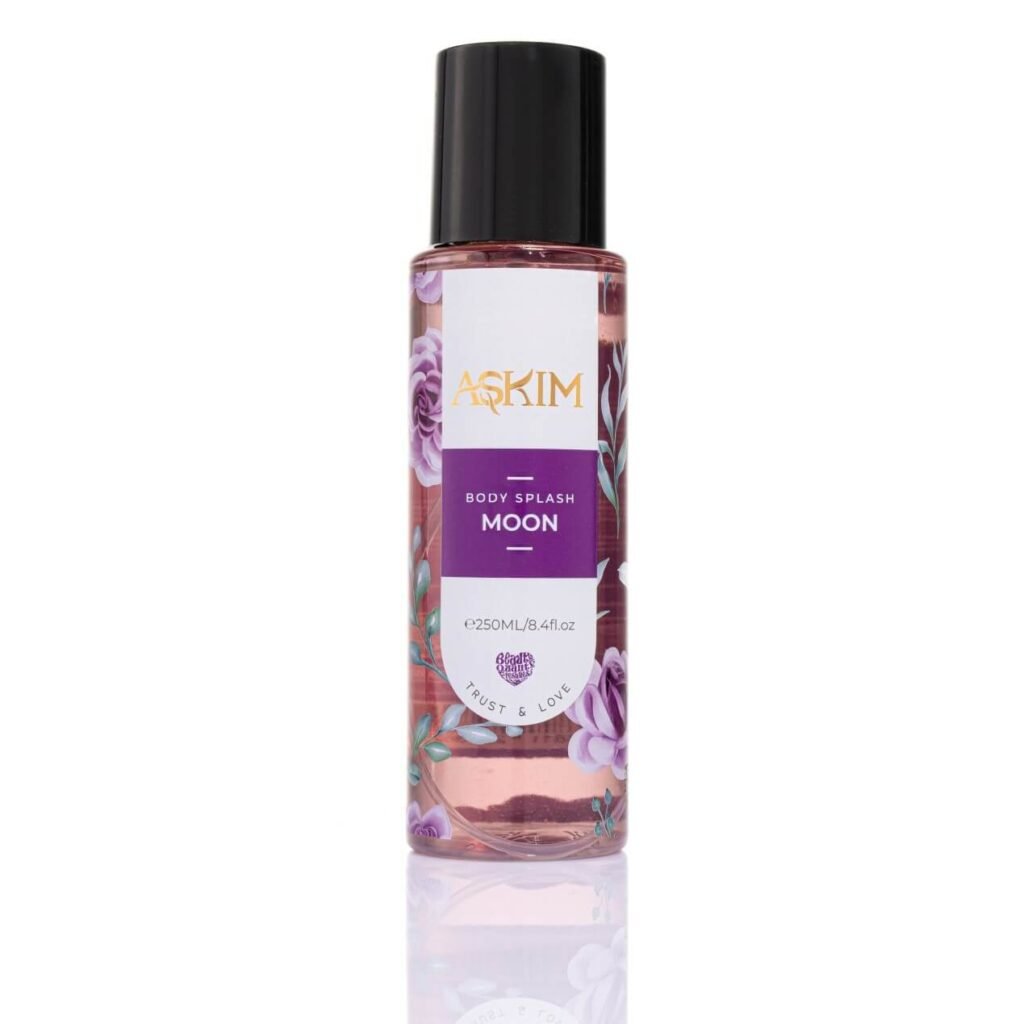
If you like to layer fragrance, a body splash applied over moisturised skin lasts noticeably longer than on bare skin, because scent clings to hydrated, lightly oiled surfaces. And if coffee is not your preferred scent, you can compare the full range of Askim body scrubs, which exfoliate in the same way with a different finish.
Frequently Asked Questions
Does a coffee body scrub remove cellulite?
No. Massaging the skin temporarily improves how it looks by increasing surface blood flow, and that is all it does. A coffee body scrub is a texture and radiance product, not a treatment, and any product that promises to remove cellulite is overpromising.
Can I use a coffee body scrub on sensitive skin?
Often yes, because there are no acids involved, but patch test first on a small area of the inner arm, use light pressure, and start with once a week. If stinging or redness lasts more than a few minutes, stop using it.
Will a coffee body scrub stain my bath or towels?
Not if you rinse the tub immediately after use. Towels are fine once the scrub is fully rinsed from your skin. Grounds can collect around the drain, so let the water run for a few extra seconds at the end.